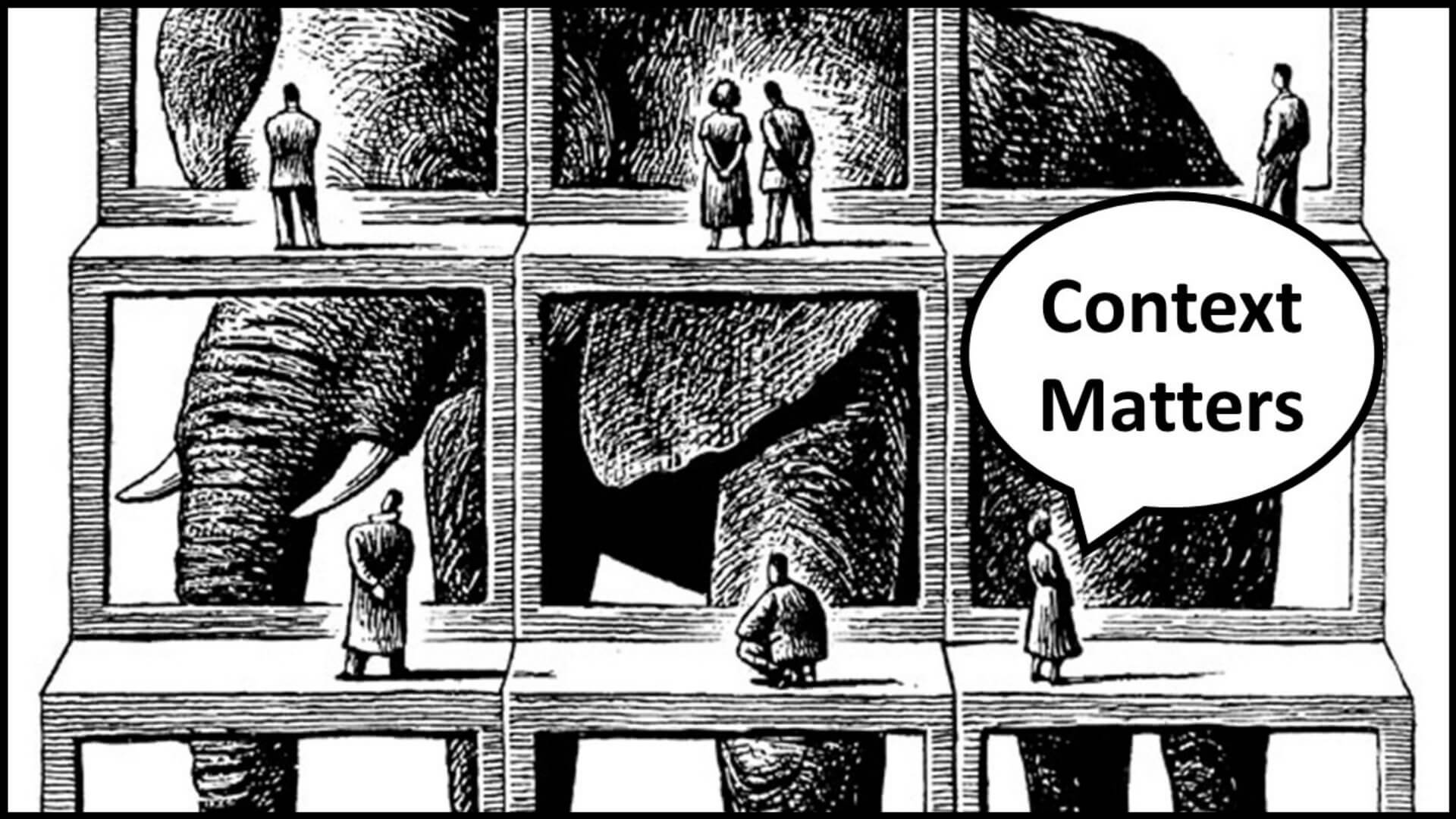
Picture this: after a long day at work, you arrive home (or close your laptop, as the case may be) and your partner is frantically packing their suitcase. “I’m leaving,” they say, before exiting the house, getting into the car, and driving away.
Alone in the kitchen, you realize how little you know about what just happened. Is your partner dealing with a work emergency? A family crisis? Do they need to get to a store before it closes? Did they just … leave you forever?
Regardless of the answer, your partner is gone. But without context, it’s impossible to know how to respond. Should you call your family? Start cooking dinner? Pack your own bag? Create a Match.com profile? How can you solve the problem if you don’t know what it is?
This happens at work all the time
Fortunately, this doesn’t happen too often in our daily lives – if it did, we might find more communicative partners. But somehow this scenario plays out at work all the time, every single day. Here’s an example to help illustrate my point – apologies if it hits too close to home:
Jane is a product manager, whose boss tells her to “remove the banner from the landing page immediately.” Jane understands that this “request” is urgent, and she chooses not to irritate her manager or slow things down by asking lots of questions. The request is clear, so Jane writes it up and injects it into the sprint. The banner is removed within the hour. Everyone is happy – for now.
Three days later, the team has enough data to assess impact of the change: as a result of the banner being removed, landing page conversion has improved by 50 bps, but nobody (literally nobody) takes advantage of the special offer, which was intended to incentivize multiple purchases. We no longer have a signup problem – now we have retention problem. Why?
As it turns out, Jane’s boss wanted the banner removed because it was covering up the email field, creating enough friction to negatively impact conversion. Removing the banner altogether was an extreme response to a simple problem, like using a sword to cut a fingernail. A more nuanced approach (like repositioning the banner instead of removing it) could have achieved both of the company’s goals. The problem was that nobody knew what the company’s goals were: no one offered them, and no one asked.
Every company I’ve ever worked at employs smart, highly motivated people. As I pointed out in my post about aligning product and engineering teams, smart and motivated people are used to delivering what’s being asked of them day after day, and they’re very good at it. Still, they crave context for their work, and they’re ready to use it to solve real business problems in smart ways. That’s good news, and there’s more: effective leaders actually want their teams to think this way. Why treat a chronic illness if you can cure the disease?
Curing the disease
Curing the disease isn’t as easy, but you can make progress today. Here’s how:
Create a culture of empowerment
If you treat your people like order takers, that’s how they’ll behave – until they find new jobs. Creating a culture of empowerment requires that we spend time thinking about problems and opportunities before proposing solutions, and recognizing that many problems have more than one perfectly acceptable solution. It means taking the time to discuss goals and provide context instead of telling people what to do, leaving space for questions, comments, and alternate approaches. There are lots of things a team can do by taking a bottoms up approach, but creating a culture of empowerment starts at the top.
Spend more time truly understanding the problem
In the wise words of Abraham Lincoln, “Give me six hours to chop down a tree and I will spend the first four sharpening the axe.” I haven’t done the math, but my years of experience tell me that every hour spent providing context to engineering teams saves between 2 and a million hours of development time. Don’t fall for the mistake of thinking hands on keys is where the magic happens. Give your teams plenty of time to understand what they’re doing and why, and they will amaze you. As you may have heard, slow is smooth, and smooth is fast.
Go out of your way to make people feel comfortable expressing their ideas
A point of view might be worth 80 IQ points, but you’ll never hear one unless you make it clear that’s what you want. In most work situations, the sad truth is that it’s safer not to argue with the boss. If you want your people to challenge you with new ideas, questions, and solutions, you have to let them know explicitly. And if your company is entirely remote, you need to remind them regularly, because it will take longer to sink in.
If you don’t know why you’re doing something, stop and ask!
The suggestions above are aimed at team and company leaders who want to create a culture of context. But once it’s clear that asking questions is okay, the responsibility belongs to everyone. I’ve seen lots of people and teams deliver the wrong work because they didn’t want to “bother” someone else, even with something as innocuous as a Slack message. If we’ve ever worked together, you’ve heard me plead: do not suffer in silence. And yet, it happens all the time. If you don’t have what you need to deliver great work, it’s your responsibility to get it. In most cases, the people responsible for providing context will think they already have, or don’t know what you need. Assume good intentions and set yourself up for success.
What do you think?
I once worked at a company that refused to provide context as a matter of policy: they felt it was more efficient for leaders to turn decisions into requirements, and to cascade those requirements to individual contributors. The way they saw it, context led to discussion, and discussion led to debate, and debate slowed things down. Simply put: they wanted less talking and more coding. You won’t be surprised to learn that this resulted in frustrated teams and failed projects.
Still, I’d love to know what you think. Have you worked at a successful company that operated differently? If so, how did you make it work? If you agree that context is important, how have you made it part of your team or company culture? Have you tried any of the suggestions above? Do you have any of your own? Please let me know!

 Lee Zukor