
There is a crisis in the workplace: employees are not happy.
According to a recent article titled “Employee Happiness Hits 4-Year Low,” published by the Society for Human Resource Management (SHRM),
[…] the overall average employee satisfaction score […] dropped to the lowest overall average score since 2019. The report is based on data collected from more than 1,600 companies nationwide, representing more than 57,000 employees.
The finding is significant for employers, who have been trying to manage employee mental health and overall unhappiness. It’s also somewhat surprising that employee satisfaction is lower now than it was at the height of the pandemic, said Anita Grantham, head of HR at BambooHR.
“The report’s time frame includes the peak of the pandemic, when employees were seeing some of the largest upheavals of their careers, so a four-year low is definitely significant,” she said.
Thoughtful people will ask why this is happening, although many of us have felt the shift, even within ourselves. SHRM has answers:
The satisfaction drop is driven by factors including inflation and financial woes, inconsistent return-to-office policies, evolving employee expectations, and layoffs, Grantham said. {…} Meanwhile, a growing focus on artificial intelligence is also sparking competition and uncertainty, employees told BambooHR.
This makes good sense: it’s hard to be happy at work if we always feel like we’re on the razor’s edge, and that any disagreement, quarterly earnings call, or new technology innovation may cost us our jobs. The fact that many of us have been let go by email only adds to the lack of humanity and connection we feel at work.
So yes, the current state of the market is contributing to our collective unease, but it’s no accident that the timing of our decline in happiness coincides with the start of the pandemic. The “inconsistent return-to-office policies” mentioned in the SHRM article barely scratch the tip of the iceberg. Just over four years ago, our offices were shuttered, George Floyd was murdered, the US Capital was under siege, and family members and friends were dying from a mystery virus. We watched it all on TV, alone.
We loved it!
I wasn’t really alone, as it turns out, and maybe you weren’t either. My wife and kids were with me, and we did our best to stay connected to friends and family with Zoom meetings and backyard get-togethers, even throughout the cold Minnesota winter.
Way back in the summer of 2020, when I asked friends what they thought of remote work, most of them told me that, although it was a bit of an adjustment, they loved it: no more sitting in traffic, no more long commutes, and no more wearing pants. They were thrilled to have more time with family, and in some ways grateful for the free time the pandemic created in their schedules. I was too. No more racing to softball games or family obligations! No more networking events or late nights in the office! While we might have missed out on a little bit of community, the trade off was well worth it.
When I asked these same friends if working from home was good for their work, the answers were remarkably consistent: not really. When work was clearly defined and teams were aligned, they could be as productive – or even more productive – than ever before (although this recent study says it’s a tie). But when it came to strategy, innovation, building a sense of team, or setting goals, especially across large teams and organizations, things got a lot harder. Relationships took longer to build. We were easily distracted (by laundry, the news, our families, Slack…). Company culture became harder to grasp. We were becoming disconnected from our jobs.
Still, all-in-all, the trade off was worth it. Work might not have been as fulfilling as it used to be, but at least it wasn’t preventing us from living our best lives. Remote work meant we didn’t have to use vacation days to travel around the world, that we could visit our parents in Florida more often, and that we could avoid Minnesota winters if we wanted to.
Remote work meant that we no longer needed to fit our lives in around our work schedules – now work would need to fit around our lives instead. With this new flexibility, we could live our lives to the fullest, focusing on the things that truly mattered, the things that gave our lives meaning. Work was just work, right? It was finally in its right place in our lives.
It felt healthy, like we were making real progress, when we told each other that we no longer lived to work, that we now we worked to live. We were face-to-face with the reality that our time on this earth is limited (leave it to a worldwide pandemic to provide some perspective…), and it was about time we focused on the most important things.
What could possibly be the downside?
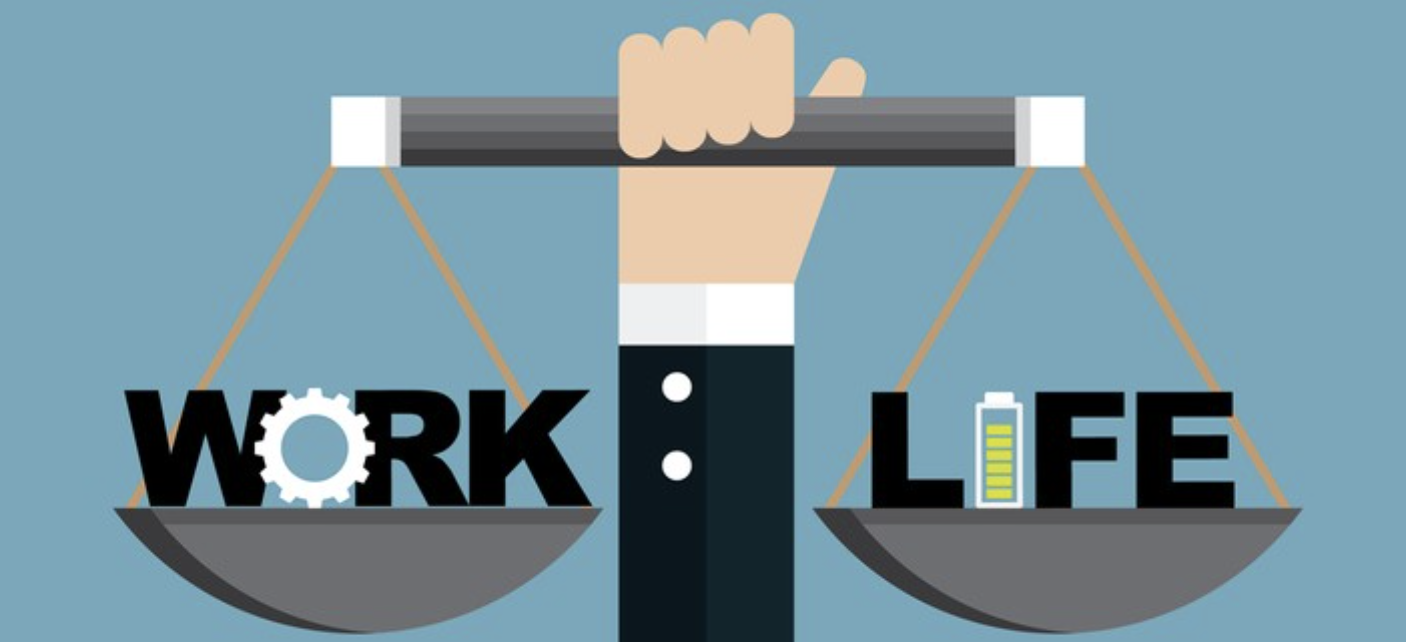
The downside
After years spent fitting life in around the edges, Zoom meetings finally, ironically allowed us to bring our full selves to work – in fact, it was unavoidable. If we insisted, in February of 2020, that our kids didn’t distract us from work, the insisting stopped cold in March. Our co-workers – and our bosses – could see what we were dealing with as clearly as they could see the Star Wars wallpaper in our home-office-slash-childrens’-bedrooms. Meetings that were once held in conference rooms, far from the chaos of home, were now held wherever we could find an internet connection. If the dog was barking, the baby was crying, or someone was at the door, well … that was life.
If all of this is giving you just a touch of PTSD, I’m sorry. But here’s the point: in the summer of 2020, while we were focusing more on our families and less on our jobs, those two things were becoming more deeply intertwined than ever before.
In the summer of 2020, while many of us struggled to find purpose in our lives, we were also struggling to find meaning in our work. Were we really put on this big, beautiful planet to build and sell B2B software to small businesses? Or to optimize checkout for Black Friday sales? Or to provide credit to those in need?
These are important, worthwhile questions to ask. Still, in some ways, the specifics of any particular job are beside the point. In the 2021 Harvard Business Review (HBR) article “How to Find Meaning When Your Job Feels Meaningless,” Rebecca Knight wrote that:
Having a professional purpose and an identity “gives your life meaning and motivation,” says Hatice Necla Keleş, a professor in the Department of Organizational Management, at Bahçeşehir University in Istanbul. “Nothing gives you more energy than a clear purpose.” Without one, “even just getting out of bed every morning becomes a challenge.”
It turns out that a lot of us were finding meaning in those jobs we were busy rejecting. Maybe our companies weren’t curing cancer or addressing climate change, but that doesn’t mean they didn’t provide a purpose.
From a distance, many of the things we do to help our companies thrive (like the activities listed above) seem unimportant, but when we’re up close, they don’t feel unimportant at all. The software we build and sell to small businesses can help them succeed, creating jobs and communities. Black Friday sales can help people have more joyful – and affordable – holidays. Providing credit to those in need can help people buy new homes, creating the possibility of generational wealth for their families.
We can choose to see our jobs as meaningless, or as meaningful. Neither is inherently right or wrong.
A slow decay
Company goals are only one way that we find meaning in our work. As a leader of teams, I’ve always understood that one of my most important responsibilities is to my coworkers, and particularly to the teams I’ve led. There is meaning in making sure an employee gets a fair review and pay raise. There is meaning in helping unlock skills or learnings that can lead to promotions. There is meaning in aligning teams around company goals in a way that feels clear and genuine, allowing them to do their best, most focused work. The truth is that – for many of us – our work and our families are more connected than we might hope.
As leadership consultant Scott Blanchard writes:
As a manager, if your people don’t feel valued, trusted, and respected—if they aren’t empowered or challenged, or if they don’t feel they’re developing a good relationship with you—those feelings go beyond their work life into their personal life. And you become the person they’re talking about at the dinner table.
And while I’ve been focused on finding meaning in helping others, the reality is that there’s also meaning in being helped. It feels good to have people at work who are genuinely caring and supportive. It feels good to learn and to be challenged. It feels good to be part of a community of people focused on the same goal.
The simple truth is that this is harder to do online. As Jeremy Noonan, Managing Parter at Torq IT, puts it, “it’s a slow decay that you don’t realize until you get out of the house.”
Seeing through platitudes
None of the information or ideas above are controversial – there’s broad agreement that, while there are lots of individual employees who are amazingly productive without ever being side-by-side with their coworkers, having some amount of in-person time (hybrid, regular get-togethers, etc.) leads to healthier teams, better problem solving, more collaboration, and deeper commitments to our work communities. So what are we doing about it?
Lots of things, as it turns out. Some companies are surveying their people, trying to figure out what a healthy balance might look like. Others are requiring people to spend a pre-determined amount of time in the office each week, or each month. Still others are doubling down on remote work, bringing the team together once or twice a year. In the best cases, companies have clear, sensible goals, and their policies are rooted in what they’re trying to accomplish. This makes it easier to communicate clearly, directly, and compellingly. But in many situations, this doesn’t seem to be the case at all: company decisions seems arbitrary, and company communications are unconvincing.
Employees – even those of us who agree that there are advantages to being with our coworkers more regularly – can see through the platitudes. We know when a company wants us back in the office in order to “justify our massive amount of real estate” or because leaders like to see “butts in seats.” And so, we’re responding, often, with annoyance. We can be just as productive at home, we say. Even if work isn’t quite as rewarding as it used to be, we tell ourselves, the trade-off is worth it. Take this recent example from Dell:
Even months after tech company Dell pushed its strict return-to-office policy barring fully remote employees from promotions, [50 percent of] its workers still refuse to come back to in-person work. Unless these employees return to the office or Dell changes its remote work policy, they will not move up the ladder.
Remote workers were willing to defy company policy because the perks of staying at home simply outweighed what they believed working in person had to offer.
And so, it seems that we’re at a bit of a standoff. Instead of trying to find the perfect solution, companies are getting used to the idea that the perfect solution doesn’t exist, that their employees, by and large, are less interested in maximizing their effectiveness at work than they are in maximizing the flexibility in their lives. Maybe this is how things should be, and we’re at the start of a healthier, more balanced way to work and live. Maybe this is something companies just need to accept. And yet, if the data tells us we’re increasingly disconnected and unhappy, why are we committed to staying that way? Shouldn’t we all – businesses and employees – be highly motivated to solve the problem?
So many questions!
I’ve been talking with people, reading articles, and reflecting on my own experiences related to the future of work, and there are only a few things I’m sure of:
Lots of smart people are working on this. We may not have solved the problem yet, but it doesn’t mean nobody’s trying. Highly motivated people at lots of companies are working hard to define the future of work in a way that works for everyone.
This is not just a problem, it’s also an enormous opportunity. The proverbial cat is out of the proverbial bag, and we can reimagine what work can and should be. We can’t simply return to the way things used to be, and it would be a mistake to try.
Whatever the future of work is, it’s not one-size-fits-all. Different companies, employees, job functions, communities, levels of experience, abilities, work styles, etc. may respond differently to different approaches. What works for some may not work for others.
The effort it will take to figure this out is well worth it. We need to continue to hypothesize, test, learn, and iterate – and it will take time. But the future of work is a big deal, way too important to give up on because it’s hard.
This is what I think, but I’d love to know what you think. Does the information above ring true? Do you agree with my assessment of the situation? Are you happier at work now than you were pre-pandemic? How have you found balance in your work and in your life these past four years? Would you trade flexibility in your life for more meaningful work? What is your company doing to help create genuine connections across time zones? Is it working? Are you happy the way things are? Do you think it matters? Do you agree that we need to figure this out? Are you up to the challenge?
I’d love to hear from you!
 Lee Zukor